
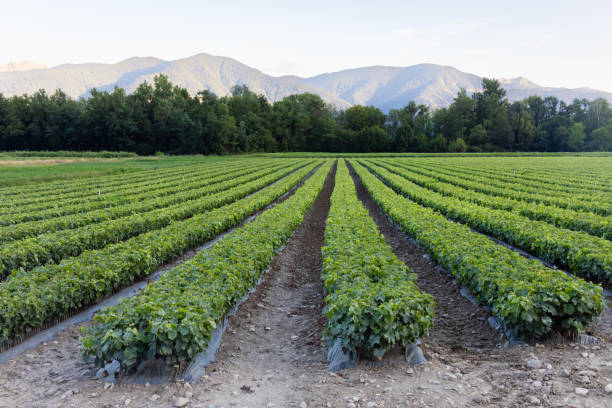
Farming has shifted from guesswork to precision. Fields now run on data, not just diesel. Devices track moisture hour by hour. Software shapes planting decisions weeks in advance. Tasks that once took days happen in minutes. Technology hasn’t changed the need to grow—it’s changed how every decision gets made.
Connectivity Built the Runway for Everything Else
The machinery doesn’t matter if nothing talks to anything. Connectivity is what quietly powers the modern farm—creating a backbone for real-time sensing, response, and coordination. In some areas, farmers are leapfrogging older infrastructure entirely, using mobile networks and GPS-enabled smartphones to gather crop data, sync with weather predictions, and trigger supply chain actions. In fact, smartphone tools that help improve crop decisions have shown how even smallholders can use broadband to map fields, receive planting alerts, and link directly with local ag specialists—all without setting foot in a physical office. Connectivity isn’t a feature; it’s the soil this transformation grows in.
Precision Is No Longer Optional
Farmers don’t plant by gut anymore. They target. They calibrate. Precision farming is about zooming in—not just by acre, but by row, by square meter, sometimes even by plant. It's changing how inputs like water, seeds, and fertilizer are used—cutting waste and boosting performance. Whether it's zone-based seeding or real-time variable rate spraying, the days of blanket treatment are fading fast. Some of the most useful precision farming technologies now include AI-assisted mapping, multispectral crop analysis, and satellite-linked monitoring that tells you which patch of corn is struggling before your eye ever could. The bottom line? Precision isn’t the future—it’s the new normal.
Business Tech Has a Place on the Farm, Too
There’s a new kind of farmer emerging—part grower, part entrepreneur. That shift brings new pressures: branding, licensing, web presence, digital payments, bookkeeping. These aren’t just nuisances. Today’s farmers are using business tools for agricultural startups to set up legal structures, track expenses, stay compliant, and build credibility. Whether you're managing an orchard or running a CSA, if your paperwork’s a mess, you’re one step from collapse. The tools that once felt out of place in agriculture are now essential gear.
Sensors Are Good. Drones Make Them Fly.
There’s something poetic about a machine that can hover, scan, and return with answers. Drones are no longer novelty toys in ag—they’re practical, affordable, and stunningly effective. Whether scouting for pests, checking irrigation uniformity, or building 3D models of crop health, they’ve become essential eyes in the sky. The real win isn’t the gadgetry—it’s the layer of intelligence added to everyday decisions. Case studies show how drones help optimize field monitoring decisions in ways that dramatically reduce manual labor while improving timing. It's not about replacing human judgment. It's about augmenting it—with elevation, speed, and unblinking awareness.
Technology Still Gets Stuck on the Ground
But for every acre flying high, there’s a system stalling out. Not every tool lands well, and not every farmer bites. It's easy to blame cost, but that’s not the full picture. Sometimes, it's design friction. Or user interfaces that feel like puzzles. Or systems that solve one thing but complicate three others. A good example is how digital systems stall in some farms because of misaligned supply chains, clunky experiences, or delayed incentives. No amount of innovation matters if the farmer doesn't trust it—or if the system breaks under real-world pressure. Bridging that gap isn't about funding. It’s about empathy, relevance, and responsiveness.
The Machines Are Driving Themselves Now
What happens when you take the driver out of the cab? You gain time, yes. But more than that, you redefine what it means to manage a farm. Autonomous machinery is quietly recoding the labor equation—especially as rural workforces shrink and demand for consistency rises. These aren’t sci-fi concepts anymore. Commercial systems are already in the field, handling everything from tilling to spraying with little human input. Reports show how robotic tractors transforming food production are helping farms run 24/7 while reducing fuel, error, and burnout. The goal isn’t replacement—it’s multiplication. A single operator can now oversee an entire fleet from a tablet.
Management Isn’t Just Dirt and Seeds
Not every breakthrough is out in the fields. Some of the most impactful tech lives quietly in the background—streamlining operations, managing finances, tracking inventory, and handling compliance. As farms scale or diversify, the back-office challenge becomes just as pressing as crop yield. That’s where tools for modern farm management needs come in—helping with planning, sales, and coordination in ways spreadsheets simply can't. This side of the tech stack is often overlooked, but it’s essential. If your logistics are broken, your harvest will be too.
Technology doesn’t replace the work. It sharpens it. Machines still break. Soil still surprises. But timing is tighter. Waste is lower. And decisions echo further. The farms that learn to integrate, adapt, and refine won’t just survive—they’ll lead.
Discover a world of opportunities in agriculture and sustainability with Smart-Agri – from scholarships and internships to grants and events, your future in agribusiness starts here!